

If you are confused between HydraFacial vs Carbon Facial, you are not alone. Both are highly popular medical-grade facials that deliver glowing, clearer skin, but they work in completely different ways. One focuses on deep hydration and gentle cleansing, while the other targets oil control, pores, and acne with laser technology. Choosing the right one depends on your skin type, main concerns, and how much downtime you can afford.
In this detailed guide, we compare HydraFacial vs Carbon Facial head-to-head — from technology, benefits, suitability, procedure steps, results, cost, and aftercare — so you can make the right choice for your skin.
What Is a HydraFacial Treatment?
HydraFacial is a non-invasive, multi-step facial that cleanses, exfoliates, extracts, hydrates, and protects the skin in a single 30–45 minute session. It uses a patented Vortex-Fusion device that creates a gentle vacuum to remove impurities while simultaneously infusing the skin with customised serums containing hyaluronic acid, antioxidants, peptides, and vitamins.
Key steps in a HydraFacial
- Cleansing & Exfoliation – Removes dead skin cells and surface dirt.
- Acid Peel (gentle) – Softens debris without irritation.
- Extraction – Painless suction removes blackheads and whiteheads.
- Hydration – Infuses nourishing serums deep into the skin.
- Protection – Antioxidant serum locks in moisture and fights free radicals.
Best for
- Dry, dehydrated, or dull skin
- Fine lines and uneven texture
- Sensitive skin
- People who want instant glow with zero downtime
Results are visible immediately — skin looks plump, radiant, and refreshed.
What Is a Carbon Facial?
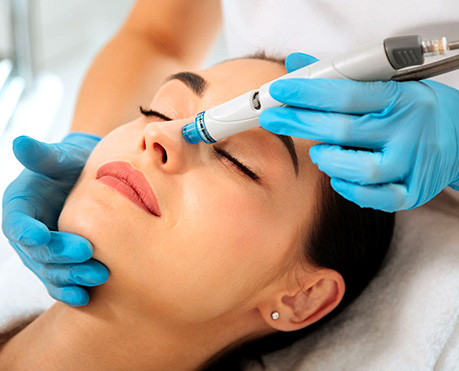
A Carbon Facial (also called Hollywood Peel or Carbon Laser Peel) is a two-step laser treatment that uses a medical-grade carbon lotion and Q-switched Nd:YAG laser. The carbon lotion acts like a magnet, drawing out oil, dirt, and impurities from deep inside the pores. When the laser is passed over the skin, it explodes the carbon particles, taking away dead skin cells, excess sebum, and bacteria in the process.
Key steps in a Carbon Facial
- Skin cleansing
- Application of carbon lotion (left on for 10–15 minutes)
- Laser treatment in two passes – first to heat the dermis and stimulate collagen, second to explode carbon particles
- Final soothing mask or serum
Best for
- Oily and combination skin
- Acne-prone skin and active breakouts
- Enlarged pores and blackheads
- Mild pigmentation and dullness caused by excess oil
It gives a matte, refined look and is especially popular among people who struggle with oiliness in humid weather.
HydraFacial vs Carbon Facial: Key Differences
Technology Used HydraFacial uses a vacuum-based vortex technology with no heat or laser. Carbon Facial uses laser energy combined with carbon particles.
Primary Skin Concerns Addressed
- HydraFacial → Hydration, dullness, dryness, fine lines, mild pigmentation, overall skin health.
- Carbon Facial → Excess oil, acne, blackheads, enlarged pores, mild acne scars, and sebum control.
Suitability for Skin Types
- HydraFacial → Safe for all skin types, including very sensitive, dry, and even rosacea-prone skin.
- Carbon Facial → Best for oily, combination, and acne-prone skin. It may feel slightly warm or cause temporary redness on very sensitive or dry skin.
Downtime and Comfort
- HydraFacial → Zero downtime. Skin feels soft and glowing immediately. You can apply makeup right after.
- Carbon Facial → Minimal downtime. Mild redness for 1–4 hours. Some people experience very light peeling the next day.
Results and How Long They Last
- HydraFacial → Instant glass-skin glow that lasts 7–10 days. With monthly sessions, skin quality improves dramatically over time.
- Carbon Facial → Visible pore refinement and oil control within 3–5 days. Results build with a series of 4–6 sessions.
Number of Sessions Recommended
- HydraFacial → Once every 4 weeks for maintenance.
- Carbon Facial → Every 2–4 weeks for oily/acne skin; once a month for normal skin.
Pros and Cons of HydraFacial
Pros
- Deep hydration and plump skin
- Painless and relaxing
- Customised serums for specific concerns (anti-ageing, brightening, acne)
- Suitable for brides, pre-party glow, and sensitive skin
- No peeling or redness
Cons
- Less effective for very oily or acne-prone skin
- Results are more short-term unless done regularly
- Cannot treat deep acne scars or heavy pigmentation
Pros and Cons of Carbon Facial
Pros
- Excellent oil and sebum control
- Reduces active acne and prevents future breakouts
- Shrinks enlarged pores
- Gives a matte, photo-ready finish
- Stimulates collagen for mild skin tightening
Cons
- Slight warmth or tingling during treatment
- Not ideal for very dry or sensitive skin
- May cause mild redness for a few hours
- Requires sun protection for 48 hours
Which Is Better: HydraFacial or Carbon Facial?
There is no universal winner in HydraFacial vs Carbon Facial. The right choice depends entirely on your skin type and goals:
Choose HydraFacial if you have
- Dry, dehydrated, or dull skin
- Sensitive skin or rosacea
- Fine lines and want plump, hydrated skin
- Need an instant glow for an event
Choose Carbon Facial if you have
- Oily or combination skin
- Frequent acne or blackheads
- Enlarged pores
- Want long-term oil control and clearer skin
Can you do both? Yes! Many dermatologists recommend alternating the two. For example, a series of Carbon Facials to control oil and acne, followed by HydraFacial for deep hydration and glow. This combination works beautifully for most skin types.
Preparation and Aftercare Tips
Before the treatment
- Avoid retinoids, AHAs, and waxing for 3–5 days.
- Come with clean, makeup-free skin.
- Inform your dermatologist about any active infections or medications.
Aftercare (same for both)
- Use a gentle cleanser and moisturiser.
- Apply broad-spectrum SPF 50 every 2–3 hours.
- Avoid saunas, steam, and heavy makeup for 24 hours.
- Drink plenty of water and follow a good skincare routine.
Cost Comparison (Approximate)
- HydraFacial: Usually higher per session because of patented technology and premium serums.
- Carbon Facial: Often more affordable and gives value when multiple sessions are taken as a package.
Prices vary by city and clinic, but a good rule is that a package of 6 sessions of either treatment is more cost-effective than single sessions.
Before and After Results
HydraFacial Before & After Skin looks visibly brighter, pores appear smaller, and the face has a healthy, dewy glow. Fine lines look softer, and makeup sits better.
Carbon Facial Before & After Pores are noticeably refined, blackheads are gone, oiliness reduces significantly, and the skin has a smooth, matte finish. Active pimples calm down within days.
Frequently Asked Questions
HydraFacial vs Carbon Facial: Which is better for glowing skin? HydraFacial gives the most instant, glass-like glow because of deep hydration. Carbon Facial gives a clearer, matte glow that lasts longer for oily skin types.
Is Carbon Facial better for acne-prone skin? Yes. The laser + carbon combination kills acne-causing bacteria, controls oil, and unclogs pores more effectively than most other facials.
Can sensitive skin benefit from HydraFacial or Carbon Facial? HydraFacial is gentler and safer for sensitive skin. Carbon Facial can be done on sensitive skin if the laser settings are kept low, but a patch test is recommended.
How often can HydraFacial and Carbon Facial be done? HydraFacial: Once every 3–4 weeks. Carbon Facial: Every 2–4 weeks depending on oiliness and acne.
Is there any downtime after these facials? HydraFacial — none. Carbon Facial — possible mild redness for a few hours.
Which facial is better before a wedding or party? HydraFacial is the favourite choice for brides and events because it gives immediate hydration and glow with zero redness.
Final Verdict on HydraFacial vs Carbon Facial
Both treatments are excellent, safe, and deliver visible results when performed by a qualified dermatologist.
- Want hydration, glow, and all-skin-type safety? → Go for HydraFacial.
- Struggling with oil, acne, and pores? → Choose Carbon Facial.
Many people benefit most from doing both in rotation. The best way to decide is to consult a skin specialist who can analyse your skin and recommend a personalised plan.
Ready for clearer, brighter, and healthier skin? Book a consultation and find out whether HydraFacial vs Carbon Facial (or a combination of both) is the right choice for you.
