

Understanding How Sugar Affects Your Dental Health
If your teeth hurt after eating sweets, you are not alone. Many people experience tooth pain after eating sweets and immediately assume it must be a cavity. While cavities are a common cause, they are not the only reason sugar can trigger dental pain. Understanding how sugar affects your teeth is crucial for maintaining good oral health and preventing long-term dental problems.
Sugar plays a major role in tooth decay, gum disease, enamel erosion, and tooth sensitivity. When you consume sweets—whether it’s mithai, chocolates, sugary tea, soft drinks, or desserts—sugar interacts with bacteria in your mouth. This interaction leads to acid production, which gradually damages tooth enamel. Over time, this damage can cause sensitivity, pain, and serious dental issues.
In this article, we will explore five surprising ways sugar harms your teeth, why your teeth hurt after eating sweets, and what you can do to protect your smile. We will also discuss treatment options for advanced dental problems and practical tips to reduce sugar damage in everyday life.
Why Do Teeth Hurt After Eating Sweets?
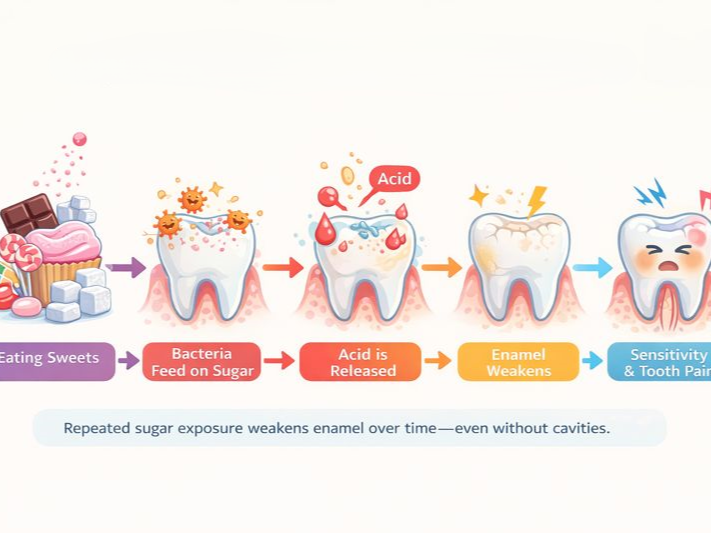
When you eat something sweet, bacteria present in your mouth break down sugar and release acids. These acids attack the enamel—the hard outer layer of your teeth. Once enamel becomes weak or thin, teeth become sensitive. This is why many people feel tooth pain after eating sweets, even when there is no visible cavity.
Sugar does not cause pain instantly, but repeated exposure weakens your teeth slowly. Over time, this can lead to sensitivity, cavities, gum disease, or even the need for dental procedures.
1. Sugar Promotes Tooth Decay
Sugar is one of the main reasons cavities develop. Here’s how the process works:
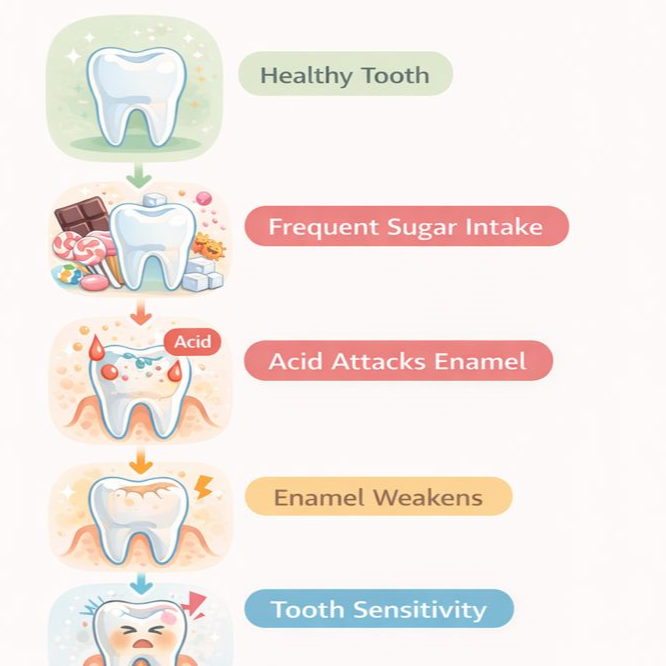
- Sugars from food and drinks are consumed by oral bacteria
- Bacteria like Streptococcus mutans feed on sugar
- These bacteria produce harmful acids as waste
- Acids attack tooth enamel and weaken it
How Is Dental Plaque Formed?
Plaque is a sticky layer of bacteria that forms on teeth. The process includes:
- Sugars from food are metabolized by oral bacteria
- Acid production increases plaque formation
- Plaque provides a breeding ground for bacteria
- Acids from plaque slowly erode tooth enamel
Once enamel wears away, bacteria can penetrate deeper layers of the tooth, leading to cavities. This damage often causes teeth hurt after eating sweets, especially when enamel erosion exposes sensitive areas.
Preventing tooth decay starts with reducing sugar intake and maintaining proper oral hygiene.
2. Sticky Foods and Sugary Drinks: A Double Threat
Sticky foods and sugary drinks are especially harmful to dental health. Common examples include:
- Toffees, caramels, and gummies
- Dried fruits
- Sweetened beverages and packaged juices
Why Sticky Foods Are Dangerous
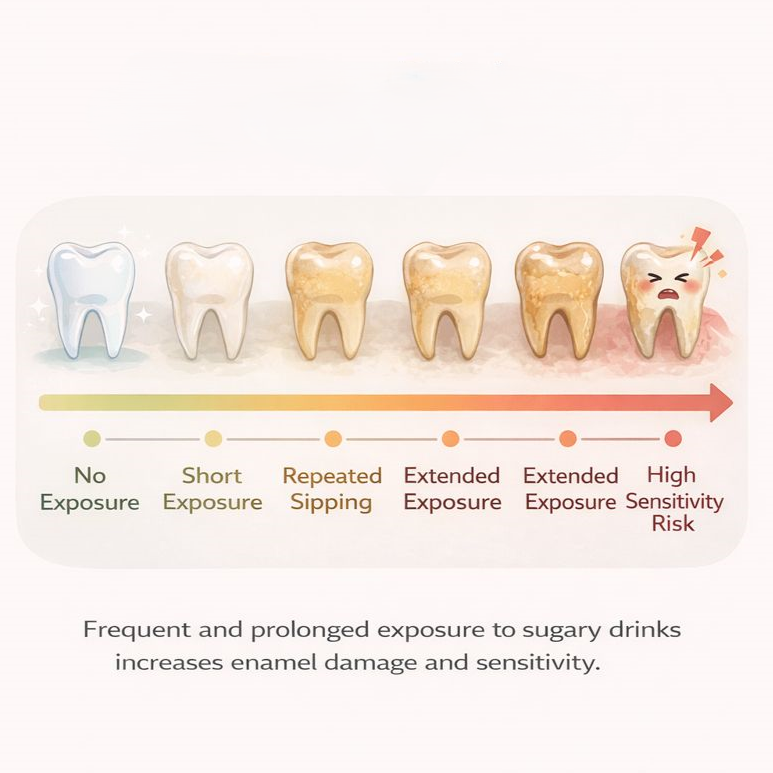
Sticky foods cling to teeth and gums, keeping sugar in contact with enamel for a longer time. This extended exposure allows bacteria to produce more acid, increasing the risk of cavities.
Sugary Drinks and Acid Attack
Sugary drinks contain both sugar and acid. When consumed frequently:
- Sugar feeds bacteria
- Acid weakens enamel directly
- Continuous sipping exposes teeth for hours
This combination makes teeth highly vulnerable and increases tooth pain after eating sweets.
Key reasons to be cautious:
- Sticky foods stay longer on teeth
- Sugary drinks cause repeated acid attacks
- Enamel erosion happens faster
Reducing consumption of these items significantly lowers cavity risk.
3. Sugar and Gum Disease: An Overlooked Connection
High sugar intake doesn’t just harm teeth—it also affects gums. Excess sugar contributes to gum disease, starting with gingivitis.
How Sugar Triggers Gum Problems
- Sugar feeds plaque bacteria
- Bacteria irritate gum tissues
- Gums become inflamed and swollen
Symptoms of Gingivitis
- Red, swollen gums
- Bleeding while brushing or flossing
- Persistent bad breath
If untreated, gingivitis can progress into periodontitis, a serious gum disease that may lead to tooth loosening or loss.
Managing sugar intake and maintaining oral hygiene are essential to protect gum health and avoid complications.
4. Sensitivity Problems: Why Sugar Causes Tooth Pain
One of the most common complaints is teeth hurt after eating sweets due to tooth sensitivity.
1. Enamel Erosion
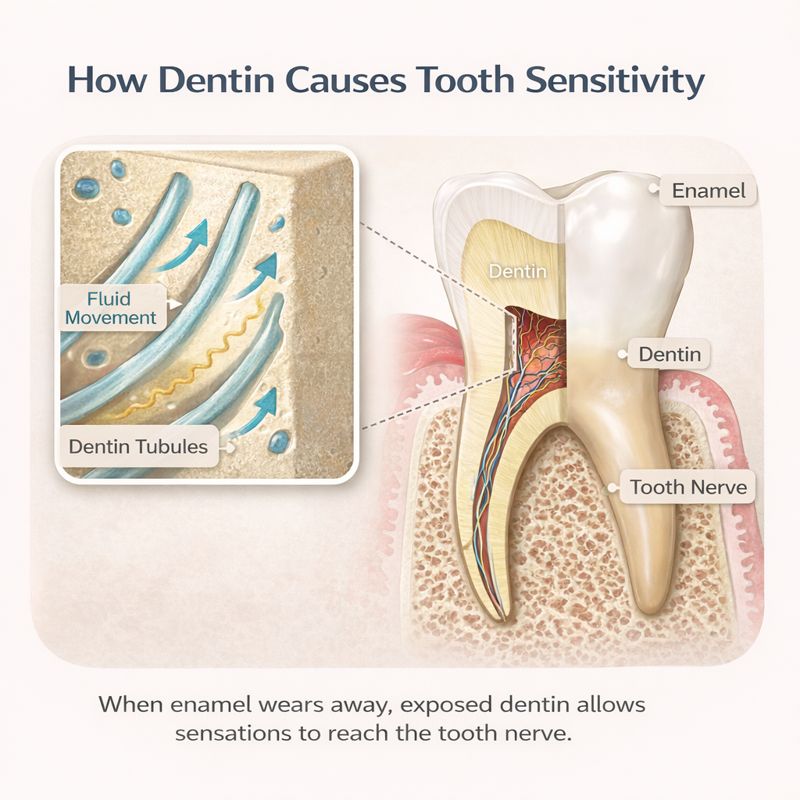
Enamel acts as a protective shield. Acid from sugar gradually erodes enamel, exposing the dentin layer underneath.
2. Dentin Sensitivity
Dentin contains tiny tubules connected to tooth nerves. When exposed, sugary foods easily trigger nerve pain.
3. Triggers and Symptoms
- Sharp pain when eating sweets
- Discomfort while drinking hot or cold beverages
- Tingling or sensitivity after meals
This explains why tooth pain after eating sweets is common even without cavities.
5. Practical Strategies to Protect Teeth from Sugar Damage
Reducing sugar damage is possible with simple daily habits.
1. Limit Sugary Snacks and Drinks
- Choose fruits, vegetables, nuts, or cheese
- Avoid frequent snacking on sweets
- Drink water instead of sugary beverages
Water helps wash away sugar and neutralize acids.
2. Maintain Good Oral Hygiene
- Brush twice daily with fluoride toothpaste
- Brush after consuming sweets
- Floss regularly to remove plaque between teeth
3. Use Sugar Alternatives
- Xylitol-based sugar-free gum reduces bacteria
- Choose sugar-free products whenever possible
These small changes significantly reduce cavity risk.
When Sugar Damage Leads to Advanced Dental Treatment
Long-term sugar damage may lead to serious dental issues such as:
- Deep cavities
- Infections
- Impacted wisdom teeth
In such cases, wisdom tooth extraction may become necessary. A dentist will guide you through the procedure and recovery process.
For people with alignment issues caused by poor dental health, modern solutions like clear aligners offer a comfortable, metal-free way to improve smiles while maintaining oral hygiene.
Conclusion: Take Control of Your Dental Health
Understanding why teeth hurt after eating sweets helps you take timely action. Sugar affects enamel, gums, and overall oral health. Reducing sugar intake, maintaining proper oral hygiene, and visiting your dentist regularly can prevent most dental problems.
Key Takeaways:
- Reduce sugar consumption
- Avoid sticky foods and sugary drinks
- Brush and floss daily
- Choose sugar alternatives
- Seek professional dental care when needed
Every small step matters. Protecting your teeth today ensures a healthier smile tomorrow.
FAQs
How does sugar contribute to tooth decay?
Sugar feeds oral bacteria, which produce acids that erode enamel and form cavities.
Why do teeth hurt after eating sweets?
This usually happens due to enamel erosion and dentin exposure, leading to tooth sensitivity.
Are sticky foods worse than normal sweets?
Yes, sticky foods stay on teeth longer, increasing acid exposure and cavity risk.
Can sugar cause gum disease?
Yes, high sugar intake worsens plaque buildup and leads to gum inflammation.
How can I prevent tooth pain after eating sweets?
Reduce sugar intake, brush regularly, floss daily, and visit your dentist for checkups.
