

Introduction
A clicking or popping sound when opening or closing the mouth is a common complaint among patients. While it may seem harmless at first, it can sometimes indicate an underlying issue involving the jaw joint or surrounding structures. Understanding whether the cause is dental or related to the temporomandibular joint (TMJ) is essential for proper diagnosis and treatment.
What is TMJ?
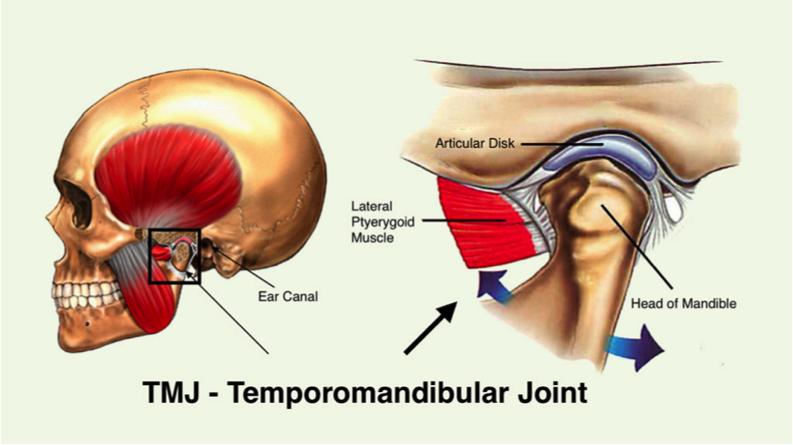
The temporomandibular joint (TMJ) connects the lower jaw (mandible) to the skull. It is one of the most complex joints in the body, allowing movements like opening, closing, chewing, and speaking.
What Causes the Clicking Sound?
1. TMJ-Related Causes (Most Common)
Think of your jaw joint like a hinge with a small cushion inside:
- The hinge = your jaw joint
- The cushion = a small disc that helps smooth movement
When everything is normal, the mouth opens smoothly without sound.
1. Disc Slipping (Most Common Cause)
What happens?
The small cushion (disc) inside the joint moves out of place.
Then what?
When you open your mouth, the jaw tries to adjust and the disc snaps back into place.
That “snap” results in the clicking sound.
Simple example:
Like a door that gets stuck and then suddenly opens with a click.
Important point:
- If no pain → usually not serious
- If pain starts → problem is increasing
2. Loose Joint (Ligament Laxity)
What happens?
The joint becomes slightly loose and does not move in a stable way.
Result:
The jaw moves slightly extra, producing a clicking or popping sound.
Simple example:
Like a loose hinge of a door making noise.
3. Overuse of Jaw (Strain)
Causes:
- Talking excessively
- Chewing gum frequently
- Teeth grinding (especially at night)
What happens?
The joint becomes tired and irritated, leading to uneven movement and clicking.
Simple example:
Like your knee making sound after excessive running.
4. Early Stage of TMJ Problem
Initially:
- Only clicking sound
- No pain
Later (if ignored):
- Pain develops
- Mouth opening reduces
- Jaw may get stuck (locking)
When to Reassure vs Worry
Okay / Normal:
- Only sound
- No pain
- Mouth opens fully
Need Treatment:
- Pain
- Mouth not opening properly
- Jaw getting stuck
2. Dental Causes
a. Malocclusion (Improper Bite)
- Misaligned teeth can alter jaw movement.
- This may indirectly cause stress on the TMJ, resulting in clicking.
b. Bruxism (Teeth Grinding)
- Habitual grinding can overload the joint.
- Leads to muscle fatigue and joint sounds.
c. Recent Dental Procedures
- Long dental appointments or wide mouth opening may temporarily strain the joint.
Associated Symptoms to Watch
- Pain in jaw or around the ear
- Difficulty opening mouth (restricted movement)
- Jaw deviation on opening
- Headaches or facial pain
- Ear fullness or ringing
When is Clicking Harmless?
- No pain
- Normal mouth opening
- No functional limitation
In such cases, it is usually not serious and may not require treatment.
When Should You Be Concerned?
- Clicking with pain
- Progressive worsening
- Locking of the jaw
- Difficulty chewing or opening mouth
These signs suggest a TMJ disorder (TMD) needing evaluation.
Diagnosis
- Clinical examination
- Palpation of joint and muscles
- Observation of jaw movement
Imaging (if needed):
- OPG
- MRI (best for disc position)
Management
Conservative Treatment (First Line)
- Jaw rest (avoid wide opening)
- Soft diet
- Warm compress
- Physiotherapy
- Occlusal splints (night guards)
Medications
- NSAIDs for pain
- Muscle relaxants (if needed)
Advanced Treatment
- Arthrocentesis
- Arthroscopy
- Surgery (rare cases)
Simple Home Advice for Patients
- Avoid chewing gum
- Do not open mouth too wide
- Practice gentle jaw exercises
- Manage stress (for bruxism)
Conclusion
A clicking noise when opening the mouth is most often related to the TMJ rather than a direct dental issue. While painless clicking is usually harmless, associated symptoms like pain or restricted movement should not be ignored. Early diagnosis and conservative management can prevent progression to more severe TMJ disorders.
