

Waking up to discover blood on your pillow after sleeping can be alarming. Whether it’s a small streak, spots, or noticeable staining, this symptom usually points to bleeding in the mouth or nasal area during the night. In many cases, it is related to oral health issues that become more apparent while you sleep.
This article explores the most common causes of blood on pillow after sleeping, how to address it, and when you should seek professional help.
Common Causes of Blood on Pillow After Sleeping
1. Gum Disease (Gingivitis and Periodontitis)
The leading dental cause. Inflamed or infected gums bleed easily, especially when there is less saliva flow at night to protect them. Advanced gum disease can cause spontaneous bleeding during sleep.
2. Aggressive Brushing or Flossing Before Bed
Brushing too hard or using a hard-bristled toothbrush can irritate the gums, causing them to bleed overnight. The blood then transfers to the pillow.
3. Periodontal Abscess or Infection
A localized gum or tooth infection can cause bleeding that worsens when lying down.
4. Loose Teeth or Trauma
Loose teeth from gum disease or recent injury can bleed when slight pressure from sleeping position or grinding occurs.
5. Bruxism (Teeth Grinding or Clenching)

Nighttime grinding irritates the gums and can cause small tears in the gum tissue, leading to bleeding.
6. Dry Mouth (Xerostomia)
Reduced saliva during sleep allows plaque and bacteria to irritate gums more easily, increasing bleeding risk. Many medications contribute to dry mouth.
7. Nosebleeds
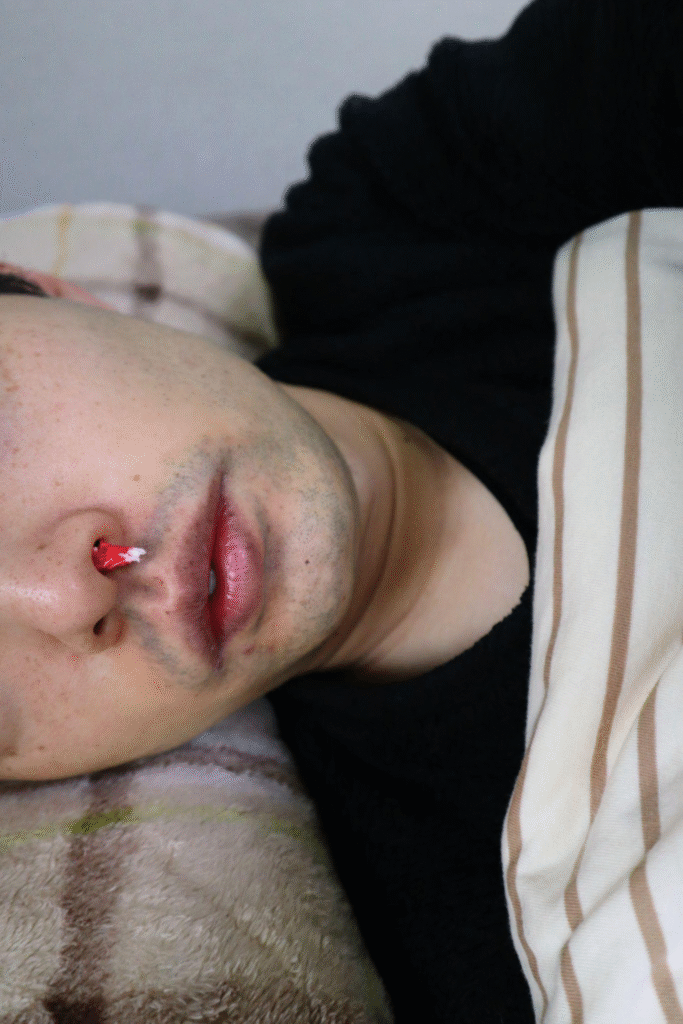
Blood from the nose can drain backward into the mouth while lying down and appear as blood on the pillow. This is common with colds, allergies, dry air, or high blood pressure.
8. Other Factors
- Blood-thinning medications (aspirin, anticoagulants)
- Vitamin deficiencies (especially Vitamin C or K)
- Hormonal changes (pregnancy)
- Rarely: More serious conditions like oral ulcers, tumors, or bleeding disorders
Associated Symptoms
- Bleeding gums when brushing or flossing
- Red, swollen, or tender gums
- Bad breath (halitosis)
- Loose teeth or receding gums
- Metallic taste in the mouth upon waking
- Nasal congestion or crusting (if nosebleed-related)
Home Remedies and Immediate Steps
- Improve oral hygiene — Switch to a soft-bristled toothbrush and brush gently. Floss carefully once daily.
- Use an antibacterial mouthwash — Rinse before bed to reduce bacteria and inflammation.
- Stay hydrated — Drink water throughout the day and keep some by the bed.
- Humidifier — Add moisture to bedroom air to prevent dry mouth and nosebleeds.
- Saltwater rinse — Gently rinse with warm salt water before bed and upon waking.
- Elevate your head slightly while sleeping to reduce blood flow to the head.
Avoid aspirin or ibuprofen if bleeding is heavy, unless prescribed.
Professional Treatments
See a dentist promptly for evaluation:
- Professional deep cleaning (scaling and root planing) to treat gum disease
- Antibiotics or antimicrobial therapy for infections
- Nightguard for bruxism
- Treatment for loose teeth or decay
- Referral to a physician for nosebleeds, medication review, or systemic issues
Early treatment of gum disease can stop bleeding quickly and prevent tooth loss.
Prevention Tips
- Brush gently twice daily and floss once a day
- Visit your dentist every 6 months for cleanings and exams
- Use a humidifier in dry seasons
- Manage allergies or sinus issues
- Wear a custom nightguard if you grind your teeth
- Review medications with your doctor if bleeding is recurrent
When to See a Dentist or Doctor
Seek medical attention if:
- Blood on pillow is heavy or happens frequently
- Bleeding continues during the day
- You have swelling, pus, severe pain, or loose teeth
- Nosebleeds are frequent or difficult to stop
- You feel dizzy, fatigued, or notice blood in stool/urine (possible systemic issue)
Blood on pillow after sleeping is often a warning sign of gum disease or another treatable condition. While occasional minor bleeding may not be serious, recurring episodes should not be ignored.
Schedule a dental check-up soon for peace of mind and to protect your oral health. Addressing the cause early can stop the bleeding and prevent more significant problems.
This article is for informational purposes only and does not replace professional medical or dental advice. Always consult a qualified dentist or doctor for diagnosis and treatment.
