

Noticing a white line inside cheeks is a common oral finding that often causes unnecessary worry. This thin, raised white streak running along the inner cheek is known as Linea Alba. It is almost always harmless and is considered a normal variation in many people.
If you’ve recently discovered a white line on the inside of your cheeks, this article explains what it is, why it appears, and when you should get it checked.
What is Linea Alba?
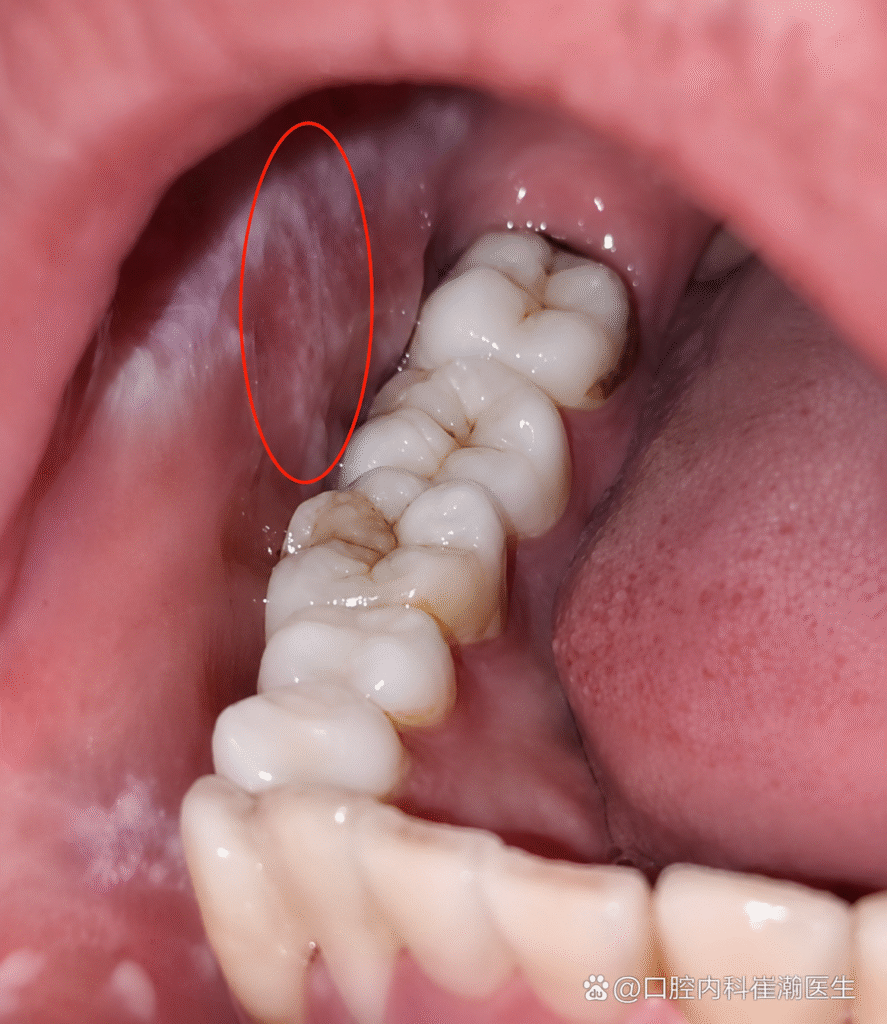
Linea Alba (Latin for “white line”) is a benign, thickened strip of keratinized tissue that forms along the line where your upper and lower teeth meet when your mouth is closed. It appears as a white or pale raised line on the inner surface of one or both cheeks, usually at the level of the biting surfaces of your teeth.
It is not a scar, infection, or cancer in the vast majority of cases. It is simply the result of chronic, mild friction or pressure from the teeth against the cheek tissue.
Common Causes of White Line Inside Cheeks
- Teeth clenching or grinding (bruxism): Constant pressure causes the cheek tissue to thicken over time.
- Bite misalignment (malocclusion): Uneven bite puts more pressure on certain areas of the cheeks.
- Cheek biting habit: Occasional or unconscious nibbling on the inner cheeks.
- Sharp or uneven teeth: Broken teeth, rough fillings, or dental work that irritates the cheeks.
- Poorly fitting dentures or dental appliances: These can create constant friction.
- Stress-related jaw tension: Often leads to increased clenching and cheek pressure.
Linea Alba tends to become more noticeable in adults and can appear on one or both sides.
What Does Linea Alba Look Like?
- A thin, white or grayish raised line running horizontally inside the cheek
- Usually smooth or slightly ridged
- Painless in most cases
- More prominent when you stretch your cheek or after waking up
- May appear slightly thicker or more defined on one side
Unlike canker sores or oral thrush, Linea Alba does not usually cause pain, burning, or ulceration.
Is a White Line Inside Cheeks Dangerous?
In nearly all cases, Linea Alba is completely harmless. It is not cancerous and does not turn into cancer.
However, you should visit a dentist if you notice:
- The white line becomes painful or ulcerated
- It suddenly changes in size, color, or texture
- You have accompanying symptoms like lumps, red patches, bleeding, or swelling
- The line is only on one side and keeps getting irritated or bitten
- You have difficulty opening your mouth or unexplained pain
These changes could indicate other conditions that need evaluation.
How to Reduce or Manage Linea Alba
While you cannot completely eliminate Linea Alba if your teeth cause constant friction, you can minimize its appearance:
- Wear a nightguard: If you clench or grind your teeth, a custom nightguard significantly reduces pressure on the cheeks.
- Fix bite issues: Orthodontic treatment or bite adjustment can help.
- Smooth sharp teeth: Ask your dentist to polish rough edges or replace irritating fillings.
- Break cheek-biting habits: Become more aware of unconscious chewing.
- Improve oral hygiene: Gentle brushing and flossing reduce overall irritation.
When to See a Dentist
Schedule a dental visit if:
- The white line is new and you’re unsure what it is
- It causes discomfort or gets bitten frequently
- You notice other changes in your mouth (white patches elsewhere, sores that don’t heal, etc.)
- You grind your teeth or have jaw pain
A quick oral examination can confirm it’s Linea Alba and rule out other concerns.
Prevention Tips
- Manage stress to reduce teeth clenching
- Get regular dental check-ups every 6 months
- Address bite problems or missing teeth
- Avoid chewing on the inside of your cheeks
- Use a soft toothbrush and gentle technique
White line inside cheeks (Linea Alba) is usually just your mouth’s way of adapting to pressure from your teeth. In most cases, it requires no treatment at all — only reassurance and occasional monitoring.
If the appearance bothers you or you’re experiencing any discomfort, consult your dentist. They can confirm the diagnosis and help reduce the friction causing it.
This article is for informational purposes only and does not replace professional medical or dental advice. Always consult a qualified dentist for proper diagnosis.
