

A well-defined chin plays a crucial role in facial harmony and balance. Whether you are a man or a woman, a strong chin enhances the jawline, improves the side profile, and creates a more attractive and confident appearance. Many people are born with a short or receding chin (retrognathia), which can make the nose appear larger, create the illusion of a double chin, or make the face look less structured.
If you are considering fillers vs implants for chin augmentation, you are exploring the two most popular and effective ways to enhance your chin. One is completely non-surgical and temporary, while the other is a permanent surgical solution. This detailed guide compares fillers vs implants for chin augmentation to help you understand the differences, benefits, risks, recovery, cost, and which option suits your needs best.
What Is Chin Augmentation?
Chin augmentation (also called genioplasty or mentoplasty) is a cosmetic procedure that improves the size, shape, and projection of the chin. It balances the face from both the front and side views. Modern techniques allow precise enhancement without changing your natural identity — only improving proportions.
The two main methods are:
- Non-surgical chin fillers (hyaluronic acid injections)
- Surgical chin implants (silicone or Medpor implants)
Both deliver excellent results, but they differ significantly in permanence, downtime, cost, and suitability.
What Are Chin Fillers (Hyaluronic Acid Injections)?

Chin fillers use thick, volumizing hyaluronic acid (HA) gel specifically formulated for deep injection. The filler is placed along the chin bone and jawline to add projection, improve definition, and correct mild to moderate recession.
Procedure
- Done in 20–30 minutes
- Uses topical numbing cream or local anaesthesia
- No cuts or stitches
- Results visible immediately
Best for
- Mild to moderate chin recession
- People who want to “test” the look before committing to surgery
- Those who prefer a quick, reversible option
- Gradual enhancement over multiple sessions
Longevity: 12–24 months (depending on the product and your metabolism). Maintenance sessions are needed to keep the result.
What Are Chin Implants?
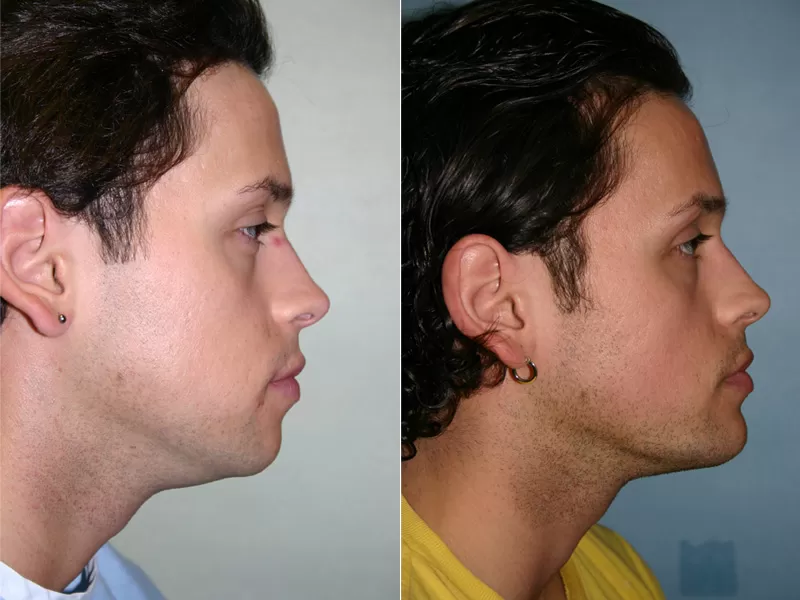
Chin implants are soft, medical-grade silicone or Medpor (porous polyethylene) prostheses placed directly on the chin bone to permanently increase projection and width.
Procedure
- Performed under local anaesthesia with sedation or general anaesthesia
- Small incision either inside the mouth (no external scar) or under the chin (well-hidden)
- Implant is inserted and fixed in place
- Surgery takes 45–60 minutes
Best for
- Moderate to significant chin recession
- Patients wanting a permanent, one-time solution
- Those who desire a stronger, more angular jawline
Longevity: Permanent. The implant stays in place for life unless removed.
Fillers vs Implants for Chin Augmentation: Key Differences
| Factor | Chin Fillers (HA) | Chin Implants |
|---|---|---|
| Invasiveness | Non-surgical | Surgical |
| Anaesthesia | Topical/Local | Local + sedation or general |
| Procedure time | 20–30 minutes | 45–60 minutes |
| Downtime | Almost none (mild swelling 1–3 days) | 7–10 days (swelling & bruising) |
| Results | Immediate, adjustable | Immediate, permanent |
| Longevity | 12–24 months | Permanent |
| Reversibility | Yes (can be dissolved) | No (requires surgery to remove) |
| Scars | None | None or tiny hidden scar |
| Cost (per session) | Lower | Higher (one-time) |
| Best for | Mild recession, trial, maintenance | Moderate–severe recession, permanent fix |
Pros and Cons of Chin Fillers
Pros
- No surgery, no scars
- Quick lunch-time procedure
- Minimal pain and swelling
- Can be done gradually for natural results
- Reversible with hyaluronidase
- Lower initial cost
- Ideal before big events or weddings
Cons
- Temporary — needs repeat sessions
- Not suitable for very weak or severely receding chins
- Risk of filler migration or lumpiness if done by inexperienced hands
- Over time, repeated treatments can become expensive
Pros and Cons of Chin Implants
Pros
- Permanent result
- Strong, natural-looking projection
- One-time procedure
- Can be combined with jawline enhancement or rhinoplasty (profiloplasty)
- Excellent for men wanting a masculine jawline and women wanting balanced feminine contours
Cons
- Requires surgery and recovery time
- Small risk of infection, implant shifting, or numbness (rare with expert surgeons)
- Higher upfront cost
- Not easily reversible
Procedure: What to Expect
Chin Fillers
- Consultation and 3D imaging to plan shape
- Numbing cream applied
- Precise injections using cannula or needle
- Immediate shaping and massage
- Go home the same day
Chin Implants
- Detailed consultation with X-rays or 3D planning
- Anaesthesia
- Small incision (mouth or under chin)
- Pocket created on bone, implant placed and secured
- Stitches (dissolvable if inside mouth)
- Compression dressing for a few days
Recovery and Aftercare
Fillers
- Mild swelling and tenderness for 24–72 hours
- Avoid touching the area for 24 hours
- No heavy exercise for 48 hours
- Results settle in 3–5 days
Implants
- Swelling and bruising peak at day 3–4
- Soft diet for 5–7 days if incision is inside mouth
- Stitches removed (or dissolve) in 7–10 days
- Full recovery in 10–14 days
Both require strict sun protection and avoiding pressure on the chin for the first few weeks.
Cost Comparison
Chin fillers usually cost less per session but require maintenance every 12–18 months. Over 5–7 years, the total cost can approach or exceed that of a one-time implant. Chin implants involve a higher initial investment but provide lifelong results, making them more economical in the long run.
Who Should Choose Fillers vs Implants for Chin Augmentation?
Choose Chin Fillers if you:
- Have mild chin recession
- Want to preview the result
- Prefer no downtime
- Are under 40 and skin is still elastic
- Want to combine with other non-surgical treatments (lips, cheeks, jawline)
Choose Chin Implants if you:
- Have moderate to severe recession
- Want a permanent, strong jawline
- Are okay with 7–10 days of recovery
- Desire a one-time solution
Many patients start with fillers in their 30s to test the look, then switch to implants later for permanence.
Can You Combine Both?
Yes. Some people use fillers to fine-tune the result after implant placement. Others combine chin augmentation with:
- Rhinoplasty (nose job)
- Jawline fillers
- Lip enhancement
- Cheek fillers
This complete “profiloplasty” approach creates perfect facial harmony.
Safety and Possible Risks
Fillers
- Bruising, swelling
- Rare vascular complications (avoided by experienced injectors)
- Lumps (can be massaged or dissolved)
Implants
- Infection (less than 1%)
- Implant displacement (rare)
- Temporary numbness of lower lip
- Asymmetry (prevented by precise surgical planning)
Choosing a qualified, board-certified plastic surgeon or dermatologist experienced in both techniques is the most important step for safe, natural results.
Before and After: What Real Results Look Like
With Fillers Side profile shows improved chin projection, softer jawline, and reduced appearance of double chin. Face looks more balanced instantly.
With Implants Stronger, more defined chin and jawline. Nose appears smaller in profile. Results are permanent and look completely natural.
Frequently Asked Questions
Which is better: fillers or implants for chin augmentation? It depends on your degree of recession and goals. Fillers are better for mild cases and quick results. Implants are superior for permanent, dramatic improvement.
Do chin fillers look natural? Yes, when done with the right product and technique. Modern thick HA fillers create a very natural, sculpted look.
Are chin implants safe? Yes. Silicone and Medpor implants have been used safely for decades with very high success rates.
Can men get chin augmentation? Absolutely. Men often choose implants for a stronger, masculine jawline.
Is the result reversible? Fillers — yes. Implants — only with additional surgery.
How long does swelling last? Fillers: 2–3 days. Implants: 7–10 days.
Final Verdict: Fillers vs Implants for Chin Augmentation
There is no single winner in fillers vs implants for chin augmentation.
- Want a quick, non-surgical preview with zero downtime? → Start with chin fillers.
- Want a strong, permanent, well-defined chin that lasts a lifetime? → Choose chin implants.
The best approach is a detailed consultation with a cosmetic surgeon who is experienced in both techniques. They can assess your bone structure, skin quality, and aesthetic goals and recommend the most suitable option — or even a staged approach starting with fillers and moving to implants later.
A well-proportioned chin can dramatically improve your confidence and facial harmony. Whether you choose fillers or implants, the goal is the same: a natural, balanced, and attractive profile that enhances your unique features.
Ready to enhance your chin and achieve facial balance? Book a consultation with a qualified aesthetic doctor today and discover the best solution in fillers vs implants for chin augmentation for your face.
