

If you are struggling with dull skin, acne scars, dark spots, enlarged pores, fine lines, or uneven texture, you have probably heard about Chemical Peel vs Laser Resurfacing. Both treatments are highly effective for skin renewal, but they work in completely different ways. Choosing the right one depends on your skin type, concern, downtime tolerance, and desired results.
In this complete guide, we compare Chemical Peel vs Laser Resurfacing in detail — from how each works, their benefits, side effects, recovery time, cost, and which one is better for common skin issues like melasma, acne marks, and sun damage.
What Is a Chemical Peel?
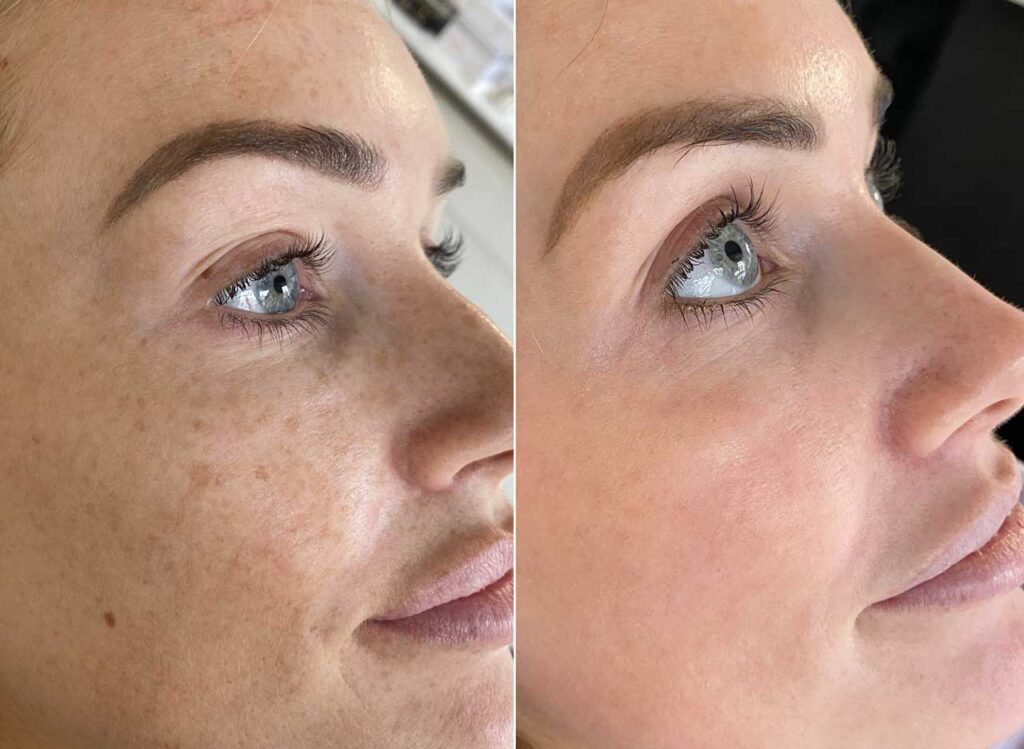
A chemical peel is a skin-resurfacing treatment that uses a controlled acidic solution to remove the top layers of dead skin cells. This process triggers fresh cell growth, revealing smoother, brighter, and more even-toned skin.
Types of Chemical Peels
- Superficial peels (AHA / glycolic acid / fruit acids) – Gentle, lunchtime peels. Ideal for glow, mild pigmentation, and oily skin.
- Medium peels (TCA – trichloroacetic acid) – Penetrate deeper. Excellent for fine lines, superficial scars, and moderate pigmentation.
- Deep peels (phenol-based) – Strongest option for deep wrinkles and severe sun damage (rarely used now due to longer downtime).
- Retinol peels – Powerful anti-ageing peels that boost collagen.
- Depigmenting peels – Specially formulated for melasma, dark spots, and pregnancy mask.
- Photodynamic peels + LED light – Combine peeling agents with LED therapy for acne, large pores, and dull skin.
What Is Laser Resurfacing?
Laser resurfacing (also called laser peeling or thermal peeling) uses concentrated light energy to heat or remove skin layers. It stimulates collagen production and removes damaged skin cells.
Main types of laser resurfacing
- Ablative lasers (CO₂ or Erbium) – Remove thin layers of skin. Very effective for deep scars and wrinkles but have more downtime.
- Non-ablative lasers – Heat the dermis without removing the top layer. Minimal downtime, good for mild wrinkles and tone.
- Fractional lasers (Fraxel, CO₂ fractional) – Treat only a fraction of the skin, leaving healthy tissue in between. Faster healing and safer for most skin tones.
- Carbon Peel / Hollywood Peel – A popular laser + charcoal combination that is gentle yet effective.
Chemical Peel vs Laser Resurfacing: Head-to-Head Comparison
| Factor | Chemical Peel | Laser Resurfacing |
|---|---|---|
| How it works | Acid solution dissolves dead skin | Laser energy heats or vaporises skin |
| Depth control | By concentration & time | By laser settings & passes |
| Best for | Pigmentation, melasma, mild scars, glow | Deep acne scars, wrinkles, sun damage |
| Downtime | 1–7 days (depending on depth) | 3–14 days (ablative) / 0–3 days (non-ablative) |
| Number of sessions | 3–6 for superficial / 1 for medium | 1–4 sessions |
| Pain level | Mild tingling to moderate burning | Mild to significant (with numbing) |
| Cost per session (approx) | Lower | Higher |
| Suitability for darker skin | Good if superficial & done carefully | Fractional lasers are safer now |
| Collagen stimulation | Moderate | Excellent (especially fractional) |
Pros and Cons of Chemical Peel
Advantages
- More affordable
- Excellent for pigmentation and melasma
- Can be customised for oily, acne-prone skin
- No machines required – quick office procedure
- Photodynamic peels can be done even in summer
Disadvantages
- Results are gradual
- Multiple sessions needed for deeper concerns
- Risk of uneven peeling if not done properly
- Not ideal for very deep scars
Pros and Cons of Laser Resurfacing
Advantages
- Precise and powerful
- Strong collagen boost → tighter skin
- Excellent for deep acne scars and wrinkles
- Carbon (Hollywood) peel is gentle and gives instant glow
- Long-lasting results
Disadvantages
- Higher cost
- More downtime with ablative lasers
- Higher risk of pigmentation changes in darker skin tones if wrong laser is chosen
- Requires experienced dermatologist
Carbon Peel / Hollywood Peel – A Popular Hybrid Option
This unique laser + charcoal treatment is loved for combination to oily skin as well as sensitive skin. The 5-step process includes:
- Enzymatic exfoliation
- Activated charcoal mask application
- Laser heating to stimulate collagen
- Laser passes to explode carbon particles (removes impurities and bacteria)
- Optional hair bleaching for lighter facial hair
It controls oil, reduces blackheads, shrinks pores, and gives an instant matte glow with zero downtime. Perfect for busy professionals.
Which Treatment Should You Choose?
Choose Chemical Peel if you have:
- Melasma or stubborn pigmentation
- Mild acne scars
- Oily or acne-prone skin
- Limited budget
- Want minimal downtime
Choose Laser Resurfacing if you have:
- Deep acne scars or chickenpox marks
- Fine lines and wrinkles
- Sun-damaged skin
- Want fewer sessions and longer results
- Can take 3–7 days of redness
Best of both worlds Many dermatologists now combine both: a series of superficial chemical peels followed by fractional laser for maximum collagen boost and pigment correction.
Preparation & Aftercare (Important for Best Results)
Before treatment
- Stop retinoids, AHAs, and waxing 5–7 days prior
- Use sunscreen daily for 2 weeks before
- Inform your doctor about herpes history (antiviral medicine may be given)
After treatment
- Strict sun protection (SPF 50+ every 2–3 hours)
- Moisturise frequently
- Avoid makeup for 24–48 hours (superficial treatments)
- No steaming, sauna, or swimming for 5–7 days
- Use only doctor-recommended products
Side Effects & Safety
Common (temporary):
- Redness, mild swelling, tingling
- Flaking or peeling (expected)
Rare:
- Infection, prolonged redness, scarring
- Hyperpigmentation or hypopigmentation (more risk in darker skin tones)
That is why choosing an experienced dermatologist is crucial, especially for medium-depth peels or ablative lasers.
How Long Do Results Last?
- Superficial chemical peels → 6–12 months (with maintenance)
- Medium chemical peels → 2–4 years
- Fractional laser resurfacing → 3–5 years or longer with good skincare
- Carbon/Hollywood peel → glow lasts 2–4 weeks; series gives 6–12 months improvement
Who Should Avoid These Treatments?
- Active herpes or skin infection
- Pregnant or breastfeeding women
- Recent isotretinoin (Accutane) users (wait 6–12 months)
- Very dark skin tones (only superficial peels or specific fractional lasers)
Final Verdict: Chemical Peel vs Laser Resurfacing
There is no single winner in Chemical Peel vs Laser Resurfacing.
- For pigmentation and glow → start with chemical peels
- For deep scars and wrinkles → laser resurfacing is superior
- For busy people wanting quick glow → Carbon (Hollywood) Peel
- For maximum results → combination approach
The best way to decide is to consult a qualified dermatologist who can examine your skin and recommend the safest and most effective option for your skin type and concern.
Ready to get clearer, brighter, and younger-looking skin? Book a consultation with a skin specialist and find out whether Chemical Peel vs Laser Resurfacing (or a combination) is right for you.
